
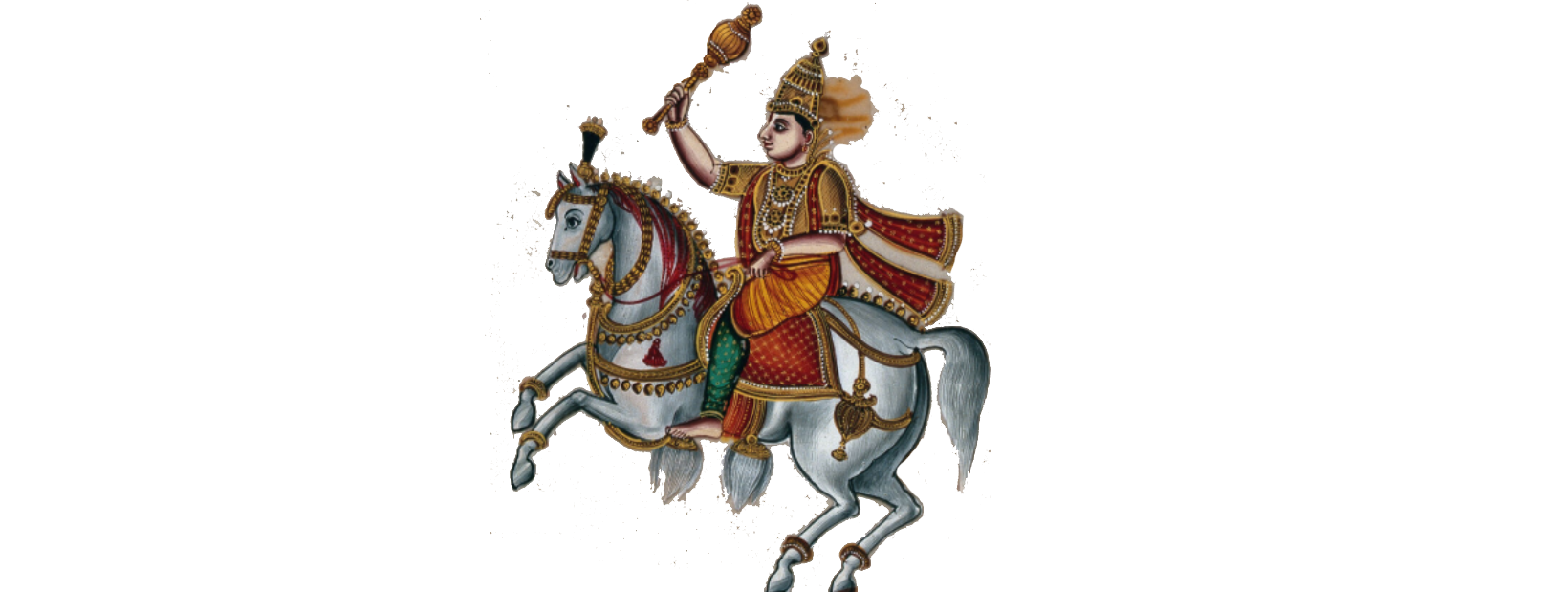
अग्न्यश्व उपनिषद्
Fire Horse Upanishad
A blessing upon wayfarers, upon those who roam without longing, upon the fulfilled and the ever-present.
Many years have passed since I last sent word to the secretary of His Holiness the Dalai Lama. It was my wish then that the secretary prompt His Holiness to offer a greeting with no request of reply, and, further, to verify the sincerity of my homage to inquire whether His Holiness still retains a small ornate dark mahogany box decorated only with brass support and straps and the given sigil/ script (shown left), the contents—merely sand and a handful of unremarkable shells to symbolise my setting off into the unfathomable ocean of bliss.

My prayer for the peace of all sentient creatures remains unchanged, though I observe that the wheel of desire and longing now whirls so fiercely that even its spokes of reflection have dissolved.
May bodhicitta arise in all hearts.
1 : न ज्योतिर्नृत्यं प्रकाशयति, वयं तु ज्योतिषे नृत्यामः
na jyotir-nṛtyaṃ prakāśayati, vayaṃ tu jyotiṣe nṛtyāmaḥ.
The Sun Rises, and falls, what analogy is this?
That we believed the light hailed us, and bowed to us. When it was always we who both saluted and submitted to it. We stand attested, and refuse to disavow ourselves from ego, (it is) because of fear.
2: विफलेन पन्थाः तिष्ठति, जयेन पन्थाः विभज्यते।
viphalena panthāḥ tiṣṭhati, jayena panthāḥ vibhajyate.
How does one become learned?
By Failure the path endures, By Victory the Path divides.
3: अनुभव-विवेकाभ्यां विद्वान् भवति।
प्रज्ञा स्वयंसिद्धा, यथायोग्यं च प्राप्यते॥
anubhava-vivekābhyāṃ vidvān bhavati
prajñā svayaṃsiddhā, yathāyogyaṃ ca prāpyate.
How does one gain wisdom and become intelligent?
Experience and discernment become the knowledgeable, wisdom belongs to itself and is received accordingly.
4: अन्तर्मुखं चित्तं गुरुतमं, बहिर्मुखं चित्तं लघुतमम्।
अन्तःश्वासः एकः, बहिःश्वासः अनन्तः॥
antarmukhaṃ cittaṃ gurutamaṃ, bahirmukhaṃ cittaṃ laghutamam antaḥśvāsaḥ ekaḥ, bahiḥśvāsaḥ anantaḥ.
What is heavier than the earth and higher than heaven?
The mind focused inward is the heaviest, the mind focused outwards the lightest.
The inward breathe is one, the outward breathe is infinite.
5: पथिकः न अन्तं जिज्ञासते, तदेव यात्रा।
pathikaḥ na antaṃ jijñāsate, tadeva yātrā.
What is the best companion of a traveller?
The wayfarer seeks no end, that is the journey
6: निःसङ्गः निःस्पृहः सर्वतः, विश्वस्य ईश्वरः स एव
niḥsaṅgaḥ niḥspṛhaḥ sarvataḥ, viśvasya īśvaraḥ sa eva.
What is happiness?
He that desires nothing, and is content with nothing, is lord of the universe
see also: Īśāvāsya Upaniṣad (Verse 1):
“Tena tyaktena bhuñjīthāḥ” “Enjoy through renunciation” — the one who releases all claim, inherits all
and Aṣṭāvakra Gītā (1.4):
“Niḥspṛhaḥ… sa mukto’sti” “The desireless one… is already liberated”
7: ज्योतिषि छाया विद्यते, तमसि तु ज्योतिर्न विद्यते
yotiṣi chāyā vidyate, tamasi tu jyotir na vidyate.
What is the nature of Ignorance, and illumination?
In the light there are shadows, in the dark, there is no light.
8: बले मन्दिरम्, शरणं साधकेभ्यः, सत्येन भित्तयः
सत्यमेव आधारम् ॥
bale mandiram, śaraṇaṃ sādhakebhyaḥ, satyena bhittayaḥ
satyam eva ādhāram.
How shall the temple stand ?
The temple rests in strength, a sanctuary for seekers; its walls are built through truth — for truth alone, without ambiguity, is the foundation.
9: यः न घोषयति ज्ञानं मत्तः — स एव गुरुः
yaḥ na ghoṣayati jñānaṃ mattaḥ — sa eva guruḥ.
Who is the teacher?
They that espouses wisdom and do not declare it arises from themselves.
10 : अगाधः सः कूपः यः कदापि न पूर्यते; तथा एव लोभः।
agādhaḥ saḥ kūpaḥ yaḥ kadāpi na pūryate; tathā eva lobhaḥ.
What can not be appeased or satiated ?
It is of its nature, that greed can never be fullfilled.
11. अन्वेषणमेव अन्वेषकस्य प्रश्नस्य उत्तरम्।
anveṣaṇam eva anveṣakasya praśnasya uttaram.
What is the meaning of life?
The meaning is the meaning, the eternal search is the quest.
12. नाहं दर्पणदृश्यम्, नाहं तस्यापि दर्शकः।
nāhaṃ darpaṇa-dṛśyam, nāhaṃ tasyāpi darśakaḥ.
What is Knowledge of thyself ?
I am not what is seen in the mirror, nor am I even its seer.
viz:-नेति नेति ~ niti niti~ Not this not this.
“Man Know thyself” said the oracle of Delphi.
“I know, that I know Nothing,” said Socrates.
The Agnyashva Upanishad as PDF below with summarised commentary. The Full commentary and discourse on the subjects to be uploaded ~TBA.





Leave a Reply