
Another rant ‘n’ swipe at the bumbling bamboozling endemic impotence of the majority of organisations and managerial hierarchy. #2 in a series of reflections born from actual incidents as an observer in the workplace. Dramatic licence has been used, names changed to protect victimisation , but the incidents and overall theme, is exact, not only is it historical, but relevant and present, born every day the moment a conceited ambititious manager stumbles out of bed.
#1 in this series was The Three Fates and the end of the Knights “
It’s alright for the generals drinking Earl Grey in the safety of comfortable tents giving orders; let them come down here, stick their heads above the parapet before telling us what dangerous job to do. There are three criteria on which to object and argue.
First, and most important, that you are right, second on the grounds of health and safety, and third on grounds of unfairness though to be fair this could be construed as subjective.
Health and safety could be construed as subjective if working for a small company with small turnover, as the Health ‘n’ Safety Act states that things can be done where reasonably practicable with a reference to risk and cost. If the organisation however has a huge wad of turnover, then it is reasonable to ask for certain conditions to be applied with regards to health and safety.
But anyways, back to the latest kerfuffle in the workplace, the implementation of an automated task assigning combobulator;
The automated job allocation system—it had gone under, cracked open like an egg under boot-heel, the yolk of its secrets spilling into unseen hands. “Hacked”, they whispered, though the bulletin said otherwise: temporary malfunction pending update, the sterile phrase that papers over panic. Yet all knew, all felt it, the sharp prick of interference, the quiet stillness of work undone. The magnificent beast come to save us, asleep.
No mails now, no jobs spun out from the humming ether. The whole hive stilled. Long gone the days, the golden days, when someone with a gripe would ring up the man with a wrench, and that wrenchman, sleeves rolled and mind quick, would see to it there and then. No queues, no forms, no clicks in the cloud. Human to human, flesh to need. Addressing the needs of his colleague. Nowadays the colleague is seen as a client.
Nowadays—you ring a helpdesk, the helpdesk rings a supervisor, the supervisor whispers to a shift leader, the leader taps a screen and—behold!—a job descends upon a tablet, blinking blue in the worker’s hand, a commandment of no compassion nor empathy. Efficiency, they call it. Every tick and tock tabulated, every hour splayed open, a frog for dissection. And at month’s end, a pie chart—sacred pie!—served up to managers like communion, slices of human labour prettily coloured and meaningless.
And Tom, steady Tom that wrench boy, plodding Tom—he takes what he’s given, nothing more nor less. “What did you do yesterday, Tom?” “Everything that was given to me.” A true answer, and damned for it. For Tom’s time is not Tom’s, no, it’s meted and measured, passed down the line like a parcel no one wants to keep. If no job lands in his palm, whose fault then the stillness? The pie chart says Tom’s. The pie chart, that mirror of managerial faith, declares him half a man—fifty percent idle, fifty percent waste. Two Toms, one too many. The pie chart doesn’t question the managers, the shift leaders, the time allocators. It’s Tom’s fault. And management restructured and employed more managers to prove so, by means of pie charts and statistics.
In better-run realms, in other organisations, they say “n plus one”, sometimes n plus two—always one spare for storm or sickness, or two. But try telling that to the priests of efficiency, to the consultants with their smooth tongues and borrowed watches (they borrow your watch and charge you for the time). A consultant, yes, that queer breed who comes in late, drinks your coffee, and tells you a ‘new’ idea based on what you told them. They’ll take your thoughts, shine them up, sell them back to you with a slide deck and a fee. The consultant’s gospel is always the plodding same: fewer hands, fewer voices, more charts. Most consultants however don’t even engage with workers, to find out the leakage of efficiency, to find out the where’s and woes of the organisation. Because, simply, if the workers can explain where things need tidying up, why employ a consultant?
And now we visit the boardroom, the nodding dogs!—their heads bobbing over shortbread biscuits and coffee foam. Savings, they murmur, crumbs on their lips, as the system hums again—patched, not healed, still whispering its secrets to the dark. The consultants, Snaffold and Gitch, sold the institution this wieldy ol’ beast, this hi-tech delivery service to replace the bits of paper and scrawled notes upon which Tom and his ilk laboured over during the old system—pinned to bulldog clips on the wall: ‘Awaiting Parts’, ‘Scheduled for weekend’ etc; now the digital work is sent back into the ether, and usually never seen again. Snaffold and Gitch will have none of the pessimism, everything catalogued, timed. The institution invested a large amount into the system, that they’d never get back from savings, all the pie chart said was ~ truncate Tom; the savings of Tom’s wages would need to pay for the annual update of the system, essential computer software updates, continuation of the licence to use it… oh, Snaffold and Gitch didn’t really go into detail about the licence. Never mind. It enables access to ever-expanding databases and ever-generated new fancy pie charts. It wasn’t really envisaged that the whole system would go down, and future crime of ransomware and digital sabotage were just side articles in tech magazines that shortbread biscuit CEOs and Snaffold and Gitch didn’t pay heed to.
Tom? Can you protest against this savagery? The ‘union’ stands as a pitiful flagpole and a tattered flag of brotherhood, everyone knows it. One worker, scabby sniffler, not in that union, walks across the picket line, “to keep the place ticking over”, and the protest fails; it should be falling over but ol’ scabby sniffler keeps the bare bones running. Snaffold and Gitch wonder, with just a caretaker, mayhaps, imagine the savings. At once penned across a spreadsheet, illustrated on the pie chart, shortbread biscuits and coffee laid out for the CEOs. “With just a caretaker” they begin, and so the spiel gathers momentum. Nodding dogs, next slide please. The figures are astounding. One caretaker. Expected call-outs to expected breakdowns to approved, backhander, contractors, and still there is a saving, on paper, even marginal but savings nonetheless. Projected thereupon the white-screen. Poor Tom, good ol’ loyal Tom, knows all the staff by first names, nods and “mornings” and “how are you”. Replaced by call-out contractors (£150 minimum call-out fee before the works even started) whose only concern is not the welfare of their fellow staff, for they are not fellows but clients, clients to be rinsed, all eyes upon profit. Hang the job out, spend all day on a job, bill £1500. Tom would have fixed it in 20 minutes, but good old wrenchboy Tom has gone, expendable. The CEOs over shortbread biscuits and pumped out coffee review the yearly update after the first year of the new business model… awful. Snaffold and Gitch are consultants, not implementers. The decision was ultimately the CEOs’ after all. Who’s to blame? Well Tom of course, if Tom had left the building in a fit ‘hand over’ state, none of these call-outs would have happened. Tom stuck plasters on things, the contractors fix it properly. So says Snaffold and Gitch. The CEOs kick themselves, why didn’t they listen previous, dodgy Tom, wretched wrenchman Tom. Now the bill is soaring, but the work is getting done properly, not quickly, like Tom. It’s the price to pay. Over elsewhere elsewise, somewhere in the n+1, two Toms do the work, no plasters, first aid or quick fix. The contractors’ call-outs, the specialists, the pie segment is thin. A small wedge, back at Snaffold and Gitch’s gravy train the car park is filling with vans and trucks and pallets of machinery in the loading bay. “What we need” sayeth Snaffold and Gitch “is to invest in better and more efficient machinery, that requires less maintenance and down time, less call-out fees and in the long term a significant savings” as Hugh Snaffold pointed laser pens at the projected graph, CEO and the provostitute positively spat out their shortbread biscuit and couldn’t sign the blank cheque fast enough before the job of tendering for the works to go ahead commence.
The tender overseen of course by Snaffold and Gitch. Because they know best. The CEO and the provisos weren’t engineers, and they’re the first to admit it, but they know a fancy graph when they see it and can swoon over the pie chart. The money saved calculated over a ten year period and as a percentage 5% awarded to the consultants. That’s a big hefty old windfall for Snaffold and Gitch remark the provostitute, “but the savings!” declared the CEO. There was no need for a clause, in case the projected savings didn’t materialise, that the new machinery actually failed way before it was due to fail, that the call-out fees were exorbitant. Due diligence paid and expected, sometimes. And the service fees and routine, essential maintenance on the new machines, wasn’t really figured with regards to increased wages, increased fuel and call-out charges. Perhaps it was alluded to by means of an asterisk and a footnote in small italic lines. Too blurry when projected onto the screen because the bright vivid colours of the pie chart illuminates the way for the eyes of the eager and tempted nodding dogs. The Engineering Facilities organisation, never listened to, never consulted, the organisation that is, apparently best in Europe and second best in the world, but does not have the capacity or intellect to see what needs to be done. And woe, the thought they’d actually ask the people in the know, on the ground, those filthy wrench-handling Toms.
and though it makes you wonder, why do organisations management and directors act so blindly, refuse to engange with people who actually do know, then remember ~ The Sleep of Reason Produces Monsters, (Francisco José de Goya) viz;–

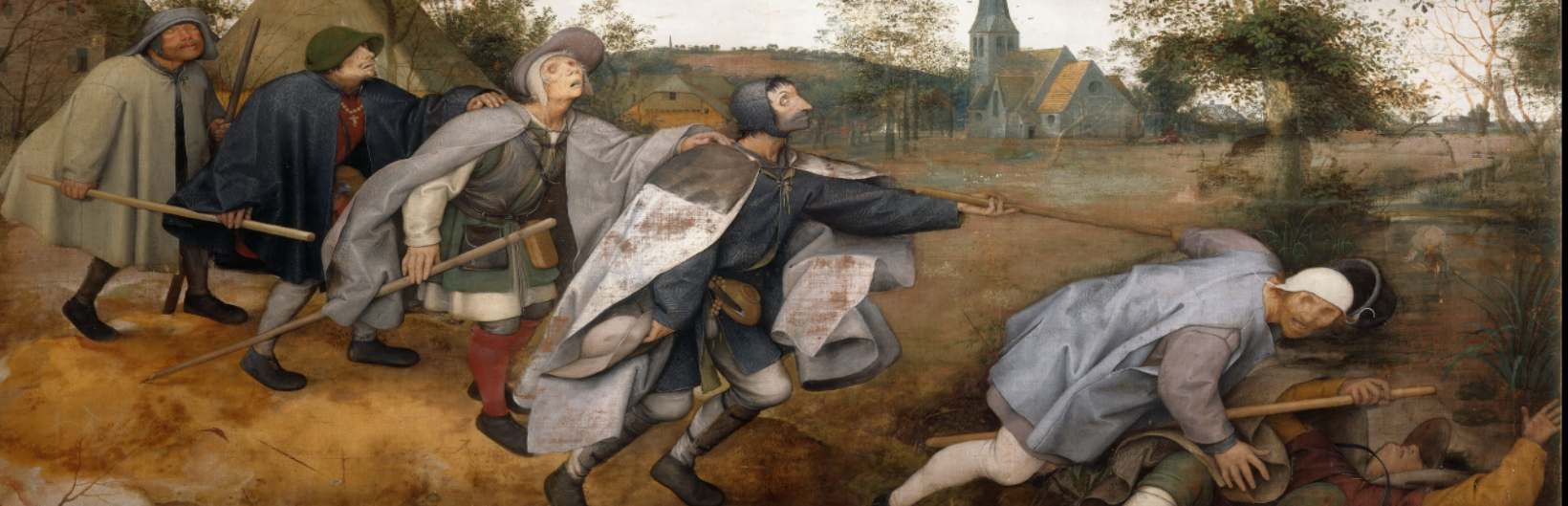
Header Illustration: The Blind Leading the Blind ~Pieter Bruegel the Elder (1568)




Leave a Reply